
Intervention Session Preparation Checklist
A practical checklist for preparing any RTI or MTSS intervention session: plan, materials, space, timing and follow-up, turned into schedulable tasks.

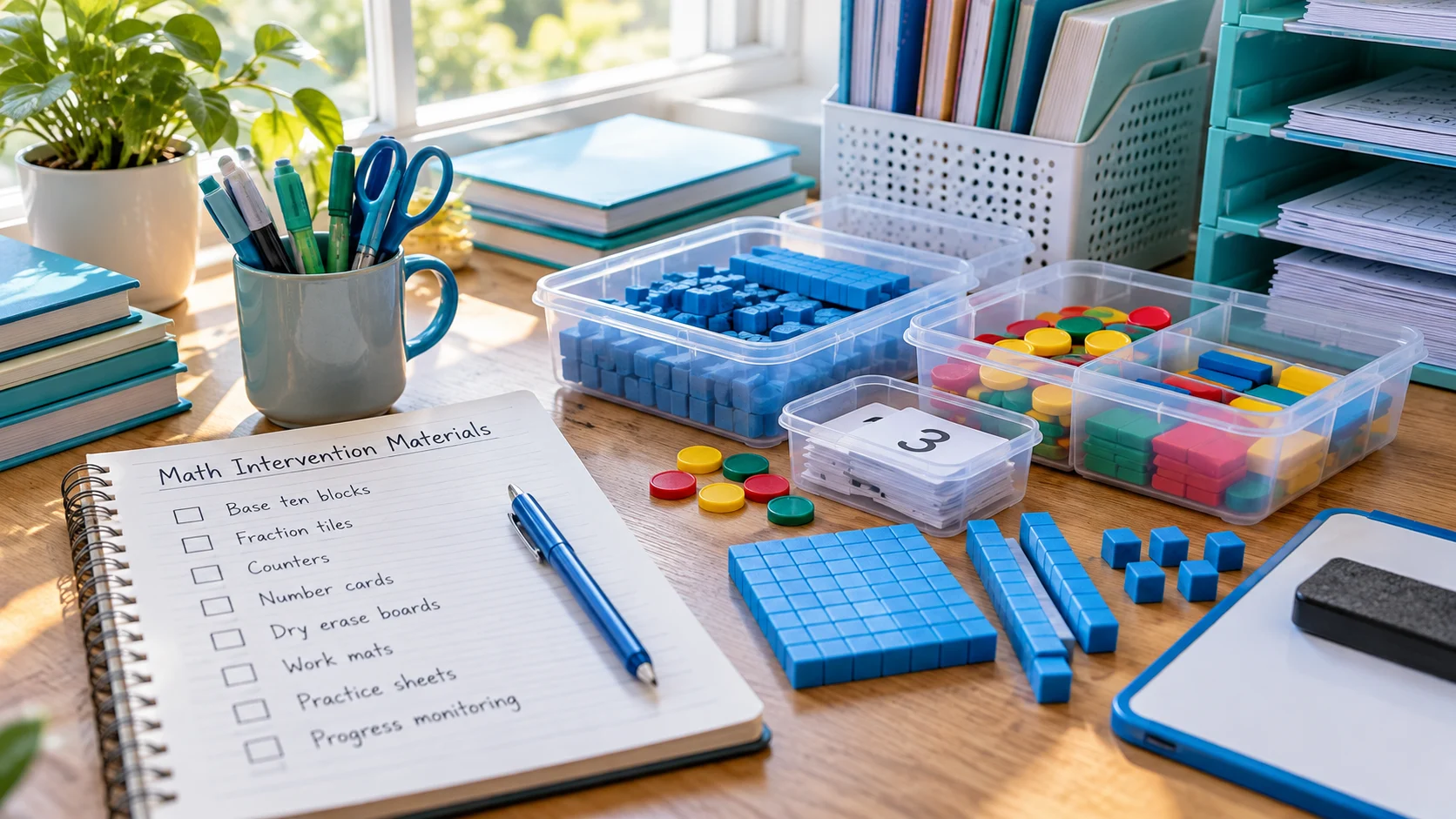
Math intervention leans heavily on physical materials: manipulatives, number lines, fact cards, practice sets, whiteboards, timers. When they’re ready, sessions run smoothly. When they’re not, valuable minutes go to hunting for base-ten blocks or waiting for the copier. Planning materials as scheduled tasks, a day or two ahead, solves most of that.
Use what your school’s chosen program and your team specify; this list is just a starting point for planning.
| Material | When to prepare | Example task |
|---|---|---|
| Copies | 1–2 school days before | Prep – copy fluency sheets for Tue/Thu math group |
| Manipulatives | Afternoon before | Prep – sort fraction tiles into group bags |
| Shared resources | When you plan the week | Prep – reserve number line set with grade team |
| Reusable tools | After each session | Follow-up – reset whiteboards and markers |
Copying is the most common bottleneck. Rather than one copy task per session, schedule one weekly copy run for all your math groups, early in the week. It’s faster, and if the copier is down, you still have time to recover.
For groups that meet regularly, keep a labeled bag or box per group with the manipulatives and tools they use most. Then preparation is just “check and restock the kit”, which takes a minute instead of ten. Schedule a short weekly task to restock kits.
Many schools share manipulatives between classrooms. When materials are shared:
Write tasks around materials and groups, not students: “T2 – Math facts group” rather than anything that identifies a child or their level. Data about students belongs in your school’s approved system.
Related: reading group preparation · session preparation checklist · splitting prep tasks
Add the sessions and prep tasks from this guide to the free RTI Scheduler. No signup needed to start.
Start SchedulingA practical checklist for preparing any RTI or MTSS intervention session: plan, materials, space, timing and follow-up, turned into schedulable tasks.
Prepare small reading groups without the scramble: schedule passage selection, word cards, copies and setup as dated tasks before each session.
Break big intervention prep jobs into small, dated tasks you can finish between classes. A method for making preparation fit into a real school day.